Marcus West Retrospective
Marcus West, Stephen Bell, Sean Clark
17th September 2025
BCS Moorgate, London
Part of the Marcus West Retrospective Exhibition
Marcus West surveys fifty years of digital art, from electronic music and plotter drawings to geometric images generated through code. Alongside his retrospective, the Drivers exhibition presents work by Computer Arts Society committee members. Recordings feature West’s account of his practice and Stephen Bell’s introduction to the committee’s varied approaches.
AI Generated Summary
Video Recording
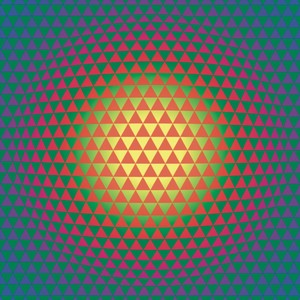
Marcus West traces his digital practice from university electronic music facilities and early computer graphics to contemporary geometric image making. Oscilloscope experiments translate numerical coordinates into luminous structures, while Fortran programs, graphics terminals and pen plotters produce line drawings whose precision also reveals mechanical irregularities. Spirals, tessellations and interacting straight lines generate optical complexity from economical rules. A later encounter with Bridget Riley’s paintings renews his interest in clarity, detail and colour, prompting a virtual canvas approach in which programs assign red, green and blue values directly to individual pixels. Rather than write a new program for every work, West develops reusable families controlled by parameters. Recursive rectangle subdivisions, mandalas, rhombus arrangements and Fibonacci constructions demonstrate how small procedural changes produce distinct visual effects. He explains the golden angle and shows how connecting regularly spaced elements reveals interwoven spirals, relating these structures to patterns in plants. His methods gradually expand beyond Pascal to Photoshop and other image software, allowing shadows, fringes, layering and simulated illumination. He also identifies a recurring attraction to light glimpsed through barriers, connecting visual motifs with personal experience. Humorous individual works, optical illusions and a patterned bowl broaden the survey beyond systematic series and flat prints.
AI Generated Summary
About the Event
Drivers Introduction
Stephen Bell introduces the Computer Arts Society exhibition "Drivers," which gathers new and existing work by members of the CAS committee. He frames the show around the computing idea of a driver as an interface between parts of a system, and likens the committee itself to a creative black box whose unpredictable output can be read through its creations. Bell then walks the audience through the catalogue, reading short statements by each exhibitor. The artists span a wide range of practice: Anna Dumitriu on bioart, genomics and antibiotic resistance; Catherine Mason on the early history of British computer art and the legacy of George Mallen; David Upton on the vanishing soundscape of London diesel engines; Ernest Edmonds on constructive systems and human-centred interaction; Geoff Davis on algorithmic storytelling and AI imagery; Graham Diprose on subversive panoramic photography; Paul Brown on cellular automata and emergent art; Sean Clark on self-organising visual systems; and Sue Gollifer on her pioneering role in digital art education and early international exhibitions. Bell closes by situating his own early work with randomness, 3D illusion and generative systems within this broader committee context, while questioning the marketing hype around recent AI.
About the Speakers
Marcus West

Stephen Bell
About the Host
Sean Clark