Talk: George Mallen and the Early Computer Arts Society
Catherine Mason
18th September 2024, 19:00
Zoom
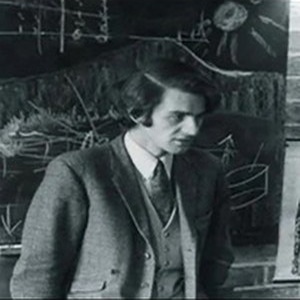
Catherine Mason discusses George Mallen's role in founding the Computer Arts Society, tracing his early computer systems work, cybernetic collaborations with Gordon Pask and landmark projects including Event One and Ecogame. This online Zoom talk examines how simulation and interdisciplinary cooperation shaped British computer and interactive art from the 1960s.
AI Generated Summary
Video Recording
Catherine Mason traces computer art through George Mallen’s career, linking cybernetics, simulation and collaborative artistic practice. His work with Gordon Pask establishes a concern with communication, learning and technology’s public value. Mason describes the founding of the Computer Arts Society and its commitment to cooperation across disciplines, emphasising PAGE and exhibitions as meeting places for artists, programmers and audiences. Event One brings together computer generated poetry, dance, film and interactive experiments. Computer Graphics 70 raises questions about whether computers amplify or supersede artists, while participatory works relocate creativity within social exchange. Ecogame is a multiplayer simulation in which decisions about individual and collective resources shape an environment of projected images. Mason explains its economic and ecological concerns, hardware, networked terminals and subsequent presentation at Davos. Connections with Stafford Beer’s planning work extend the discussion beyond galleries. Mallen’s Royal College of Art activities support experimental animation and computing education, while Interact demonstrates the society’s expanding range. Newly located archival materials recover overlooked projects and clarify accounts. Stephen Boyd Davis concludes by stressing Mallen’s resistance to oversimplified models, attention to multimedia practice and humane understanding of complexity. Computing matters most here when it enables unimaginable activity rather than simply accelerating established tasks.
AI Generated Summary
About the Event
In "George Mallen and the Early Computer Arts Society", Catherine Mason draws on her Springer book Creative Simulations to trace the origins of British computer, interactive and generative art through the career of George Mallen. She describes Mallen as a pioneer of computer systems since 1962, a physics graduate who worked at the Royal Aircraft Establishment before joining Gordon Pask's cybernetic Systems Research, where he saw how simulation could model thought processes and public engagement. In 1968 he co-founds the Computer Arts Society with Alan Sutcliffe and John Lansdown, helping establish a culture of sharing between artists, scientists and machines. Mason highlights his role in founding System Simulation Limited in 1971, which supports the arts and eventually donates the CAS art collection to the Victoria and Albert Museum. She walks through landmark projects: the interdisciplinary Event One exhibition at the Royal College of Art in 1969, the Computer Graphics 70 conference at Brunel University, the participatory Eco Game shown at Olympia and then Davos, and the 1973 Edinburgh Fringe show Interact. Throughout, she stresses how cybernetics, simulation and cooperation shaped a vision of computing as a medium for art, learning and societal change.
About the Speaker
Catherine Mason