How Quantel's Paintbox Changed Our World
Adrian Wilson and Kim Mannes-Abbott
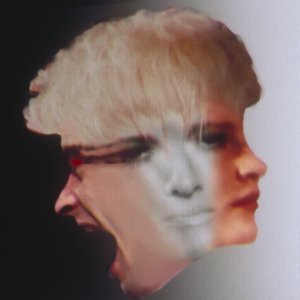 Title: How Quantel's Paintbox Changed Our World
Date: 26th May 2023
Speaker: Adrian Wilson and Kim Mannes-Abbott
Summary
Adrian Wilson and Kim Mannes-Abbott describe how Quantel's Paintbox transforms the history of digital image making. Launched in 1981, the video Paintbox and its 1985 photo-quality successor anticipate Photoshop by several years, offering an intuitive, pressure-sensitive stylus that lets artists draw and manipulate images directly on screen. Wilson traces its origins at Quantel in Newbury, where Paul Keller solves the key technical puzzle and Martin Holbrook designs the accessible, paint-themed interface. The device revolutionises broadcast graphics, pop videos, advertising and album covers, training the public to accept virtual images long before the internet. The speakers recall that demonstrators such as Mannes-Abbott are flown worldwide to show the machine, while artists including Keith Haring, David Hockney, Jennifer Bartlett and Richard Bernstein use it to explore a new digital medium. Wilson also notes that the absence of an undo button and the enclosed hardware-software system shape a distinctive creative workflow. Despite its profound influence on contemporary visual culture, the Paintbox remains largely excluded from the art-historical canon because it was commercial and video-based. The accompanying Computer Arts Society exhibition presents a representative selection of works that reveal the machine's range and argue for its rightful place as a foundation of digital art.
Generated by AI using kimi-k2.7-code (3rd September 2026).