Jasia Reichardt Lecture 2025
Francesca Franco, hosted by Sean Clark
 Title: Jasia Reichardt Lecture 2025
Date: 20th January 2025
Speaker: Francesca Franco
Host: Sean Clark
Location: BCS Moorgate, London
Summary
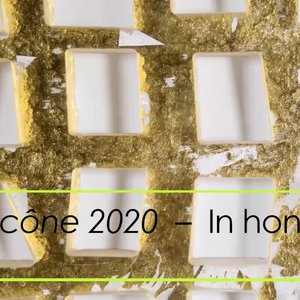
Francesca Franco delivers the second annual Jasia Reichardt Lecture in January 2025, hosted by the Computer Arts Society, and dedicates her talk to the pioneering computer artist Vera Molnár. She traces her own path from Renaissance art history in Venice to the study and curation of computational art in London, describing how direct contact with living pioneers such as Molnár, Ernest Edmunds and Manfred Mohr transformed her research. Franco recounts key projects, including the 2017 Algorithmic Signes exhibition in Venice, Molnár's historic debut at the Venice Biennale at the age of ninety-seven, and the Icon 2020 commission that translated Molnár's 1974 plotter drawings into a Murano glass sculpture. She explains Molnár's working method as a lifelong dialogue between manual and computational processes, driven by curiosity, chance, order and disorder, and an "imaginary machine" later realised through code. During the question-and-answer session, Franco discusses how Molnár treated randomness as intuition, how Venetian glassmakers embraced unfamiliar technology to realise Icon 2020, and Molnár's playful final experiments, including an NFT made at the age of ninety-eight. Throughout, Franco argues that curators can honour computational art's history by commissioning new work that keeps the pioneers' practice alive and tangible.
Generated by AI using kimi-k2.7-code (3rd September 2026).